
Traditional Sauna at Home – Turnkey Sauna with Heater and Sauna Stones

How many times this month did you plan to take a sauna—and then skip it because it was too much of a hassle?

You're not alone. You have the willpower. But the gym closes, the sauna is occupied, and getting there takes time. In the end, it doesn't happen—not because you don't want to, but because the barrier is too high.

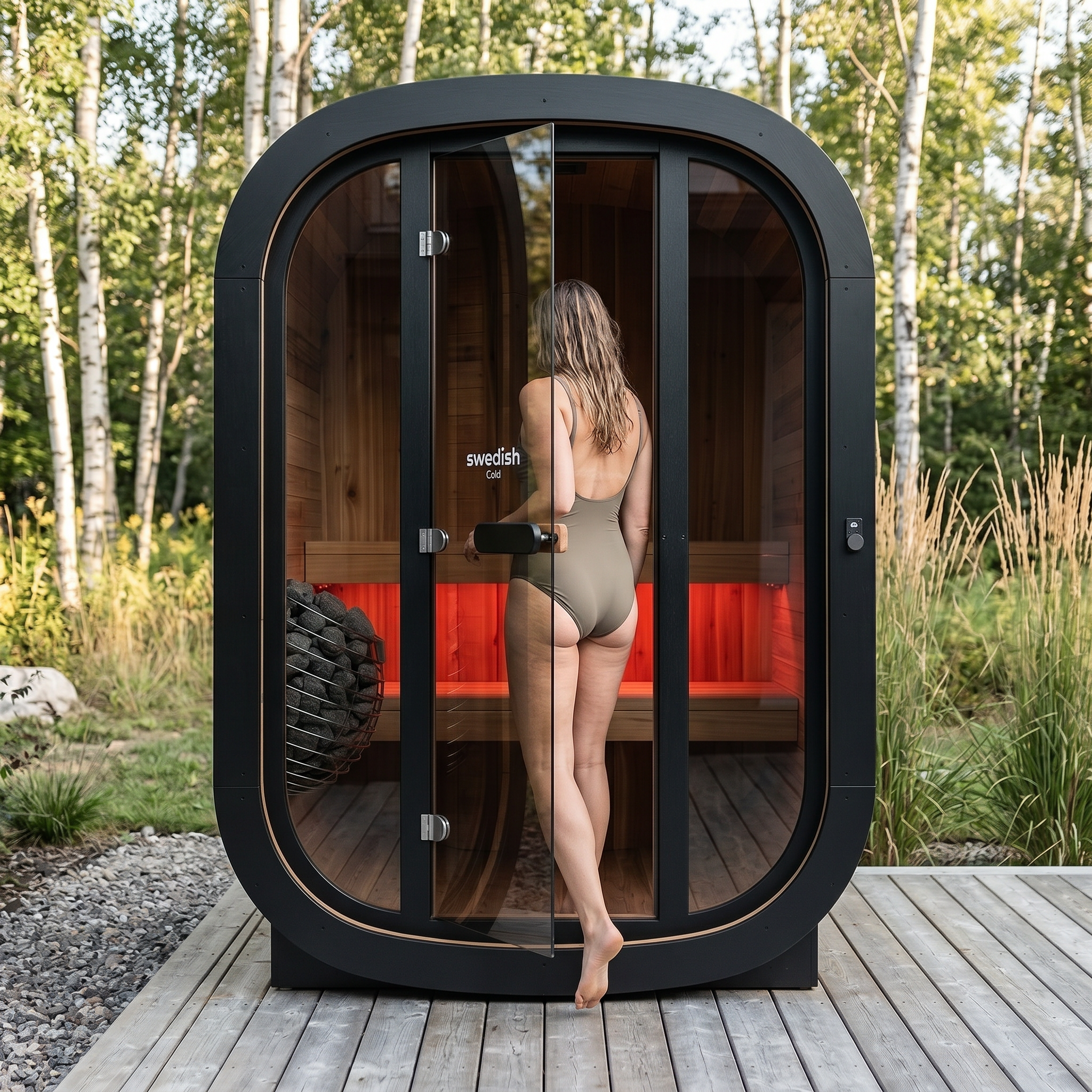
A traditional home sauna eliminates that barrier entirely. No reservations, no set hours, and no travel time. The outdoor models, Private Escape and Grand Escape, can be preheated via Wi-Fi and a touch panel from inside the house, so the sauna is warm when you step outside—whether it’s 6:00 a.m. on a Tuesday or 10:00 p.m. on a Friday, just as easily in the middle of winter as in July.

And it is consistency that matters. According to long-term Finnish research, 4–7 sauna sessions a week are associated with a 50% lower risk of dying from cardiovascular disease and a 66% lower risk of dementia compared with one sauna session a week. It is not the occasional sauna that makes the difference—it is the habit.

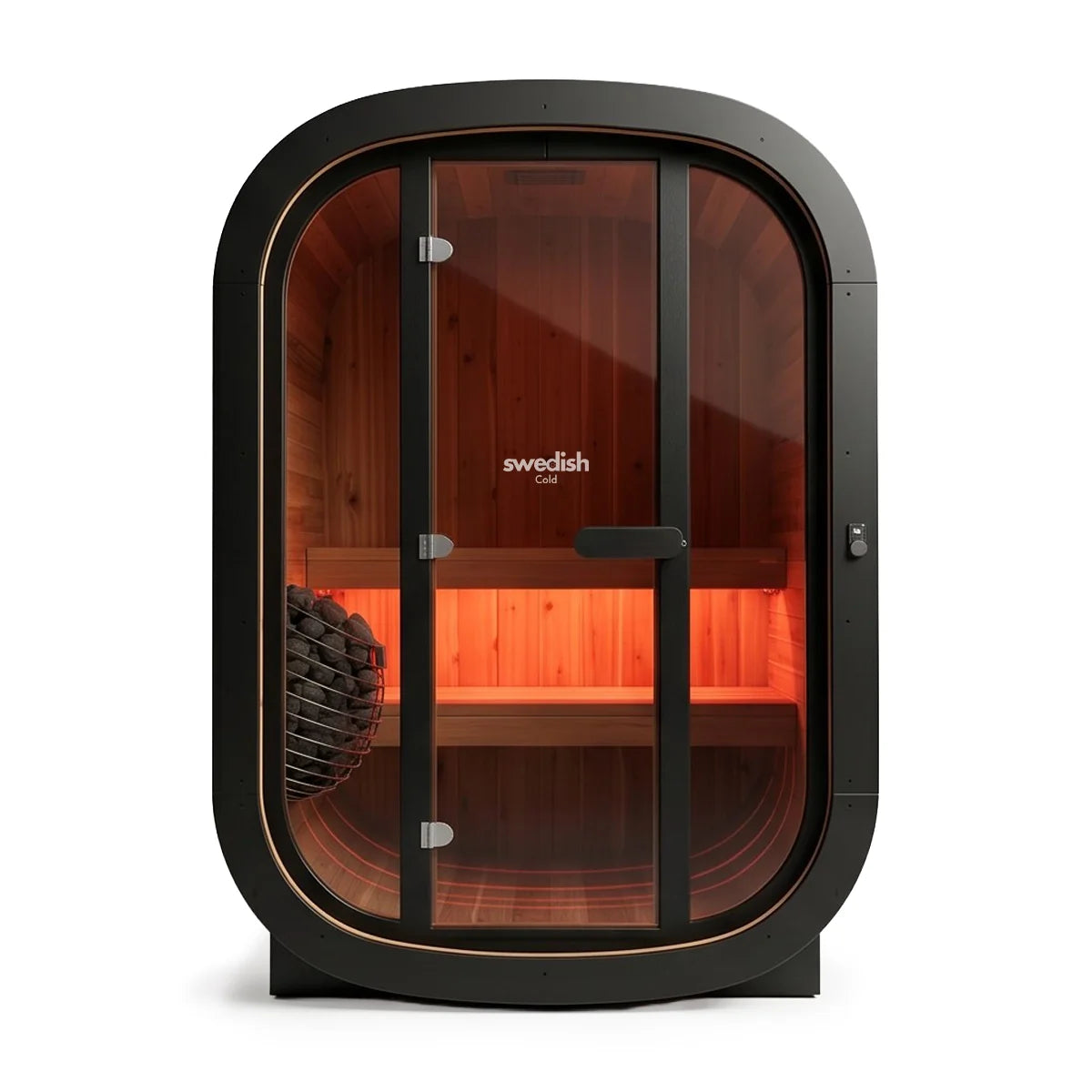
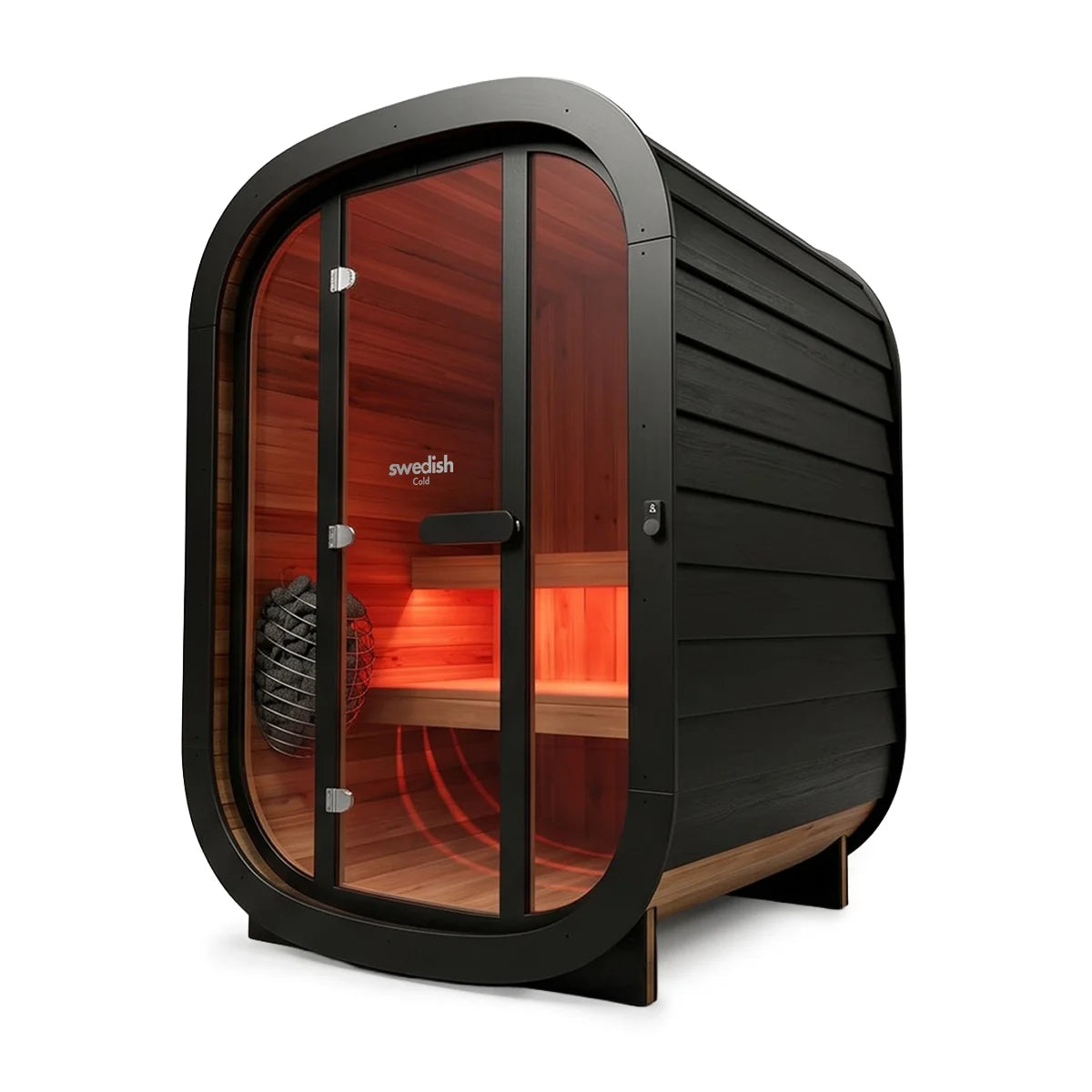
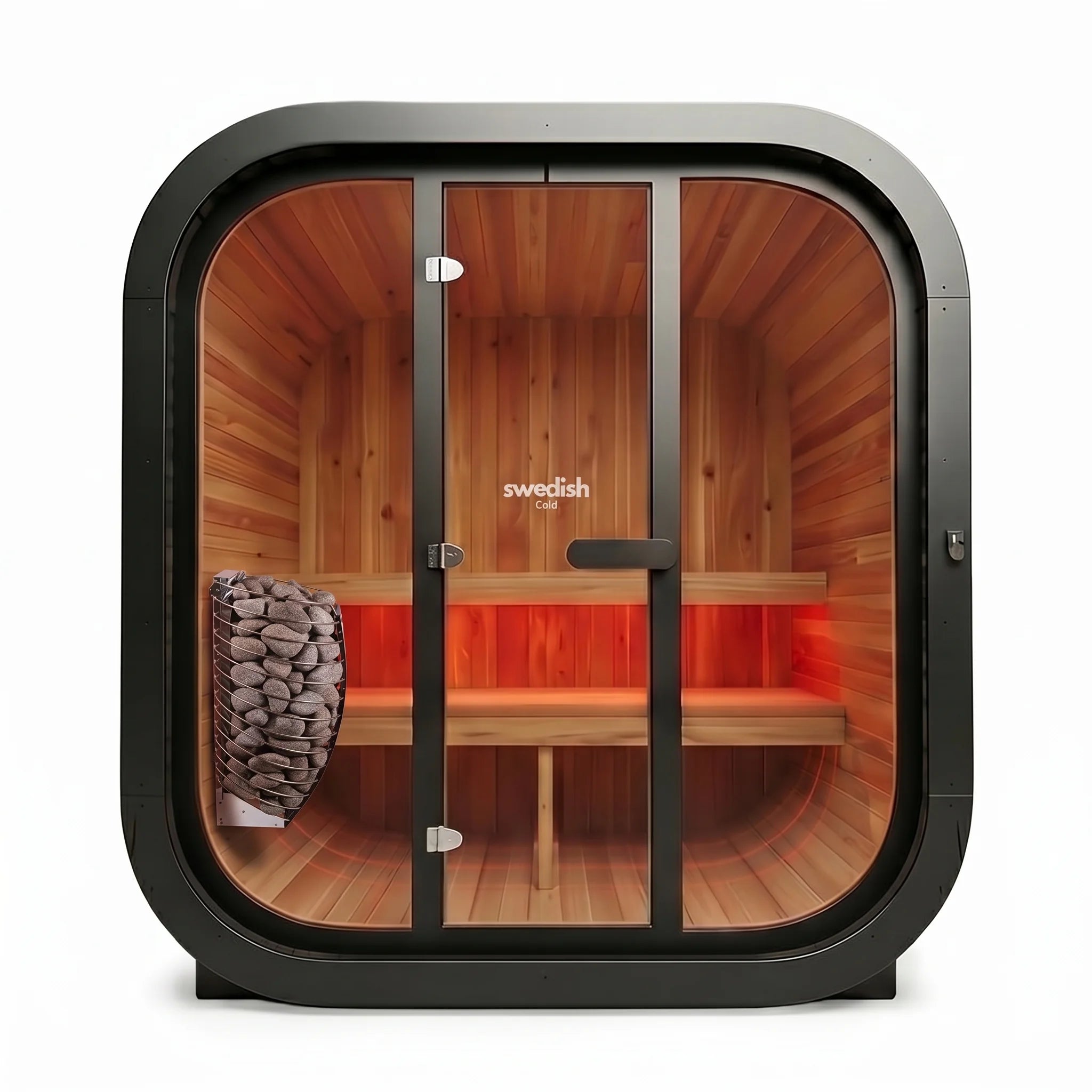
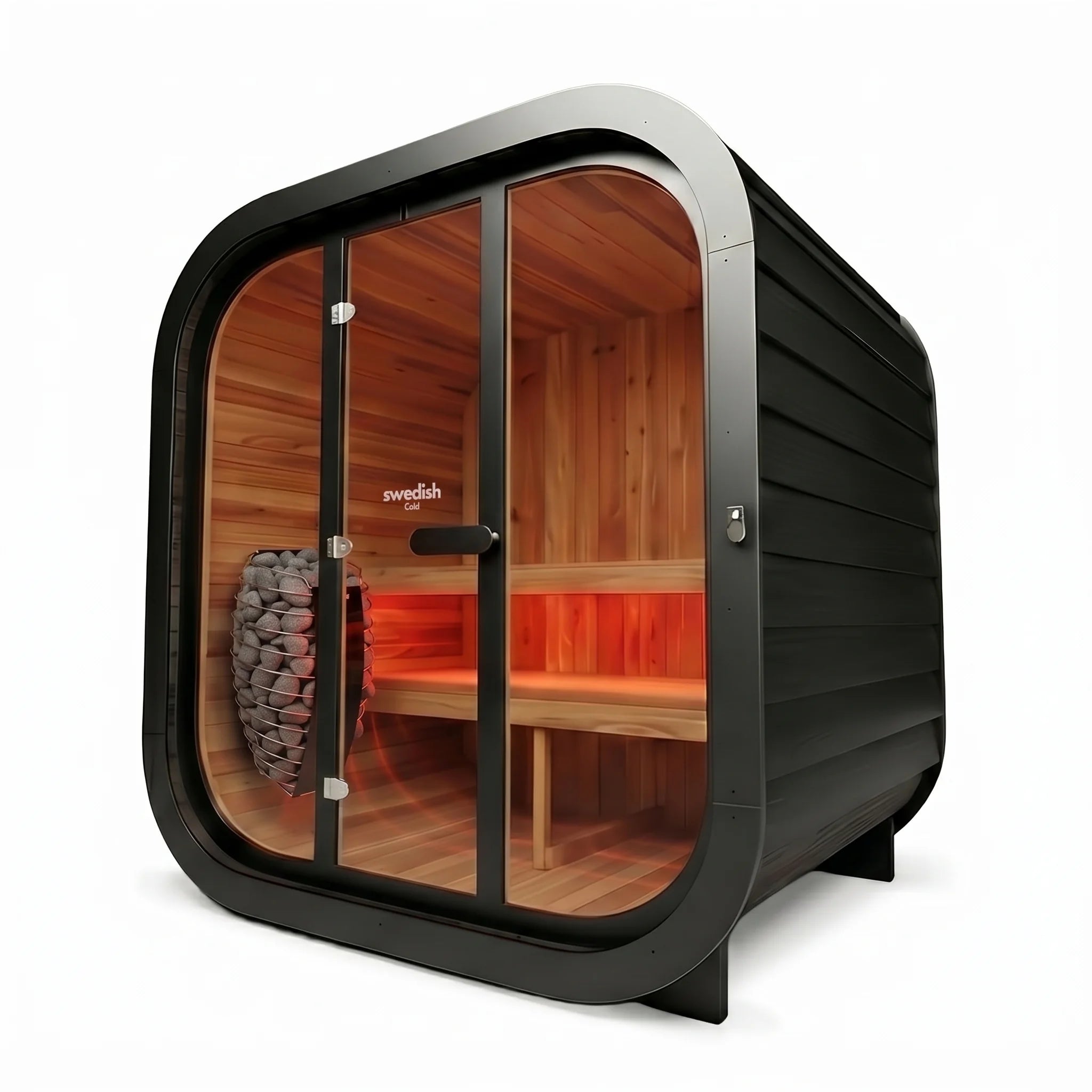
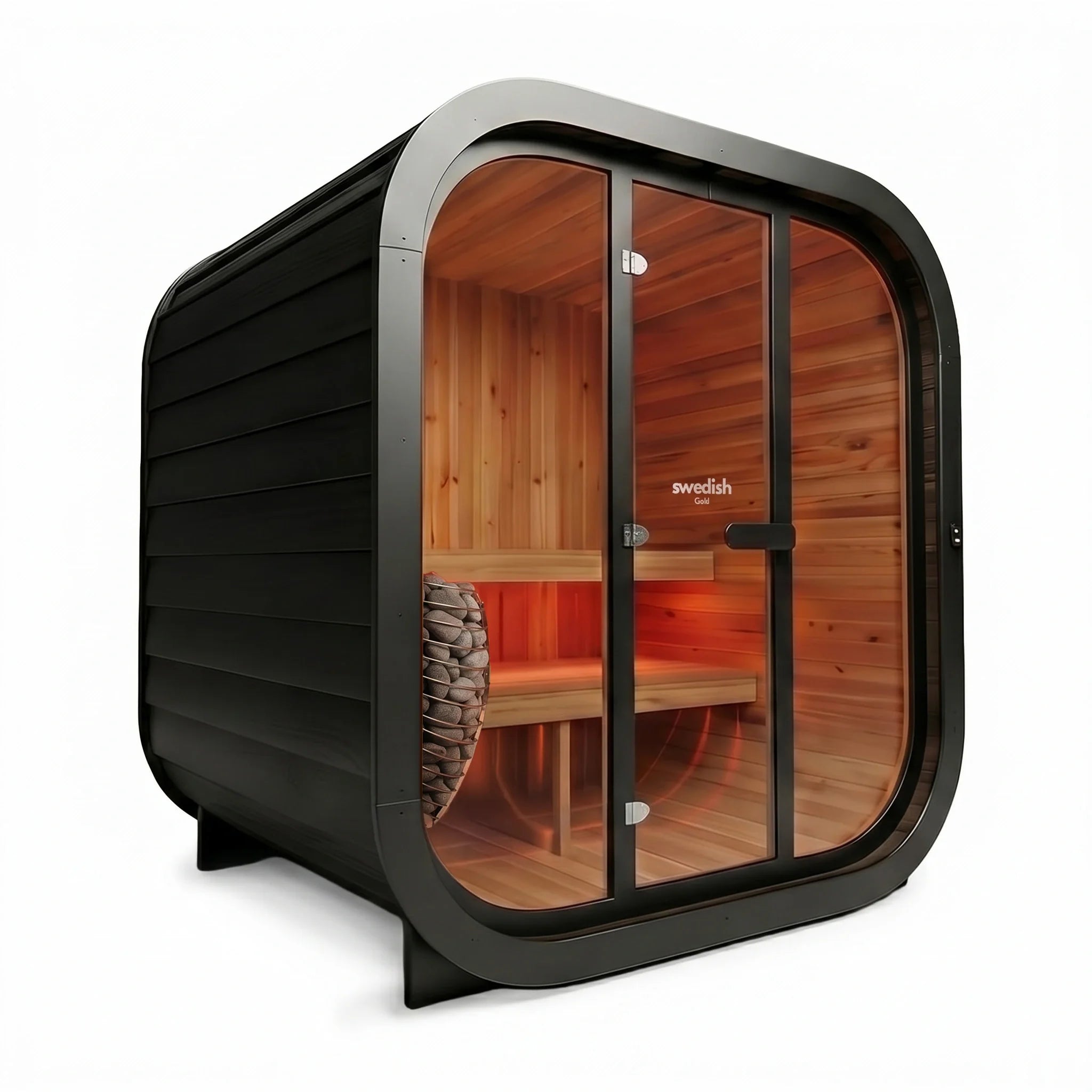
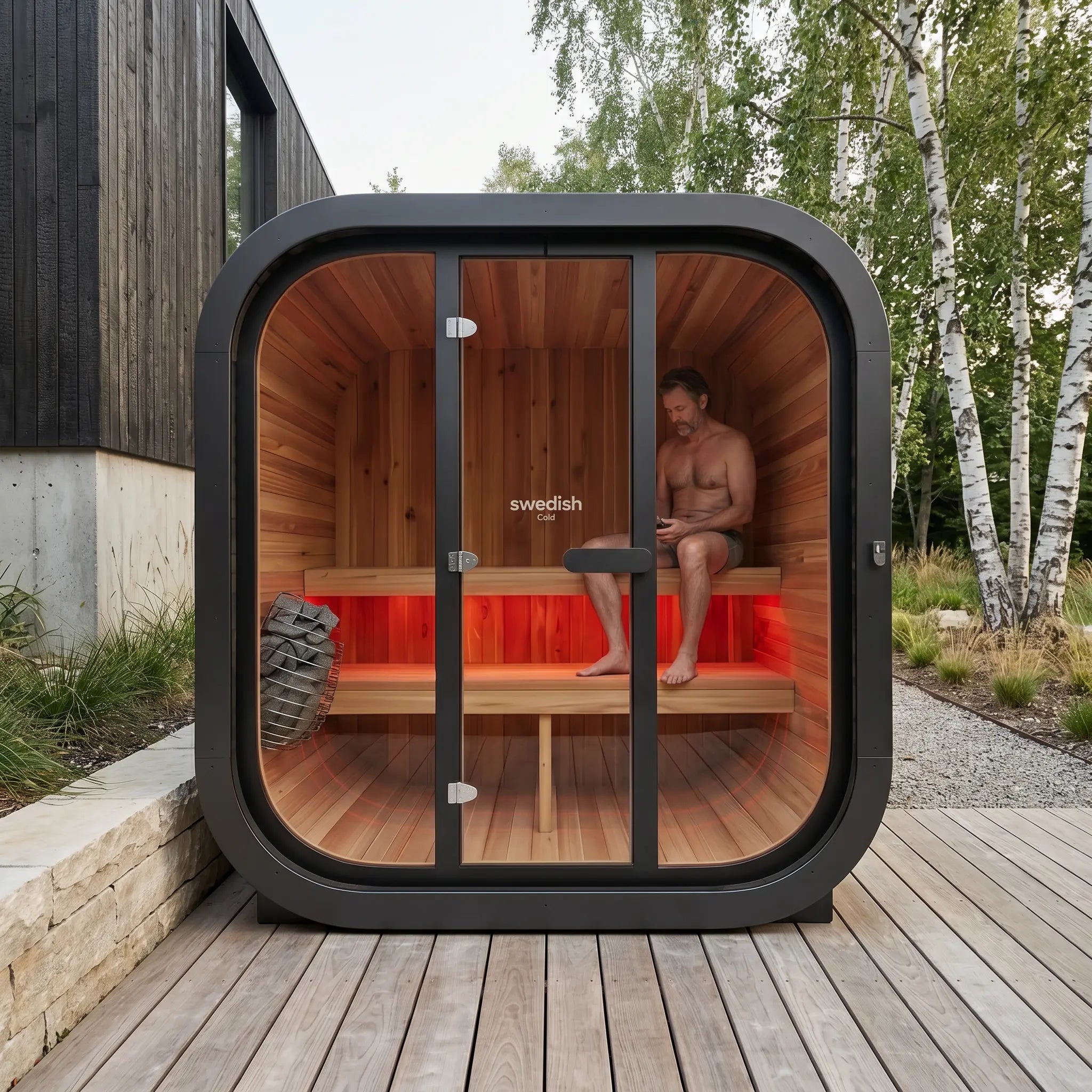
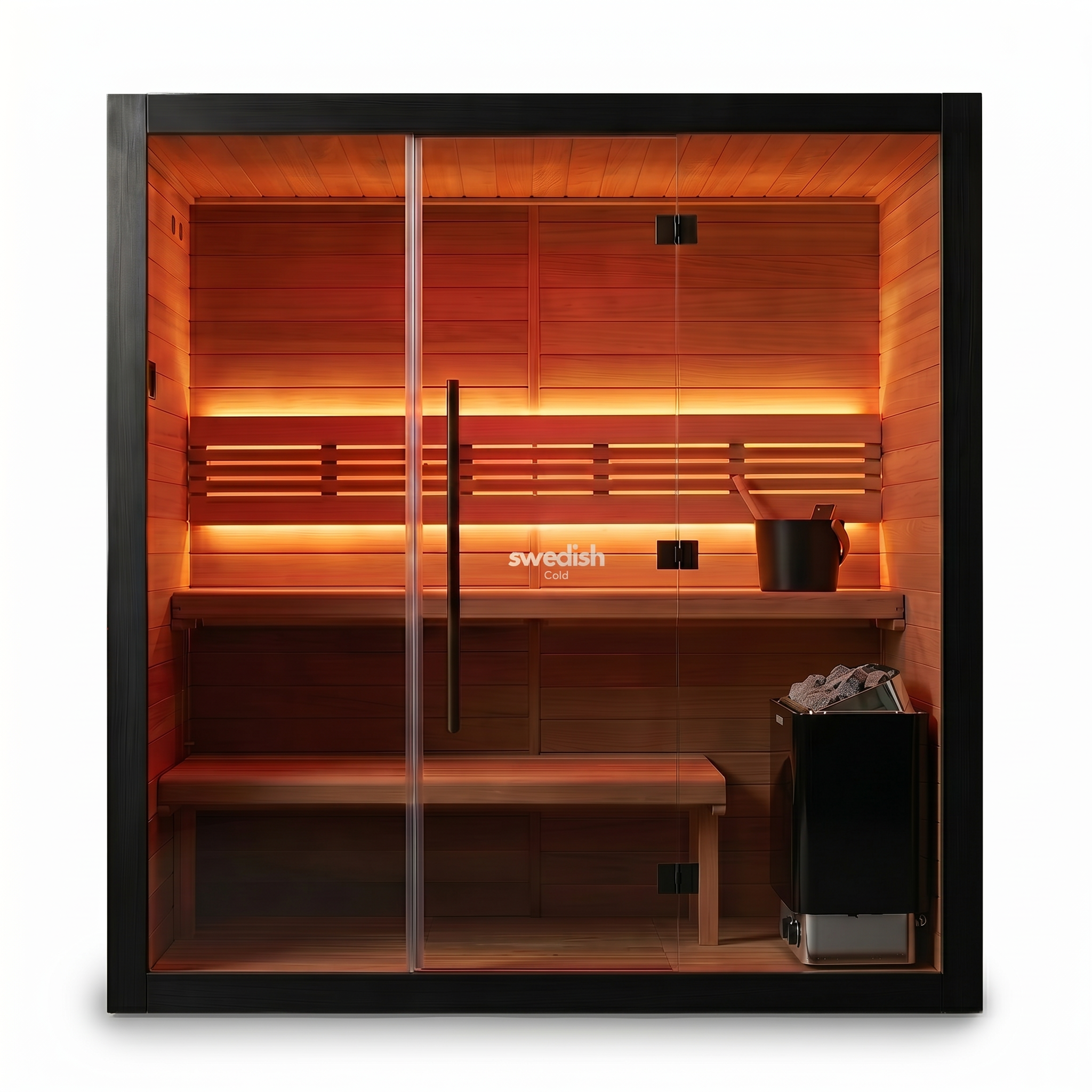
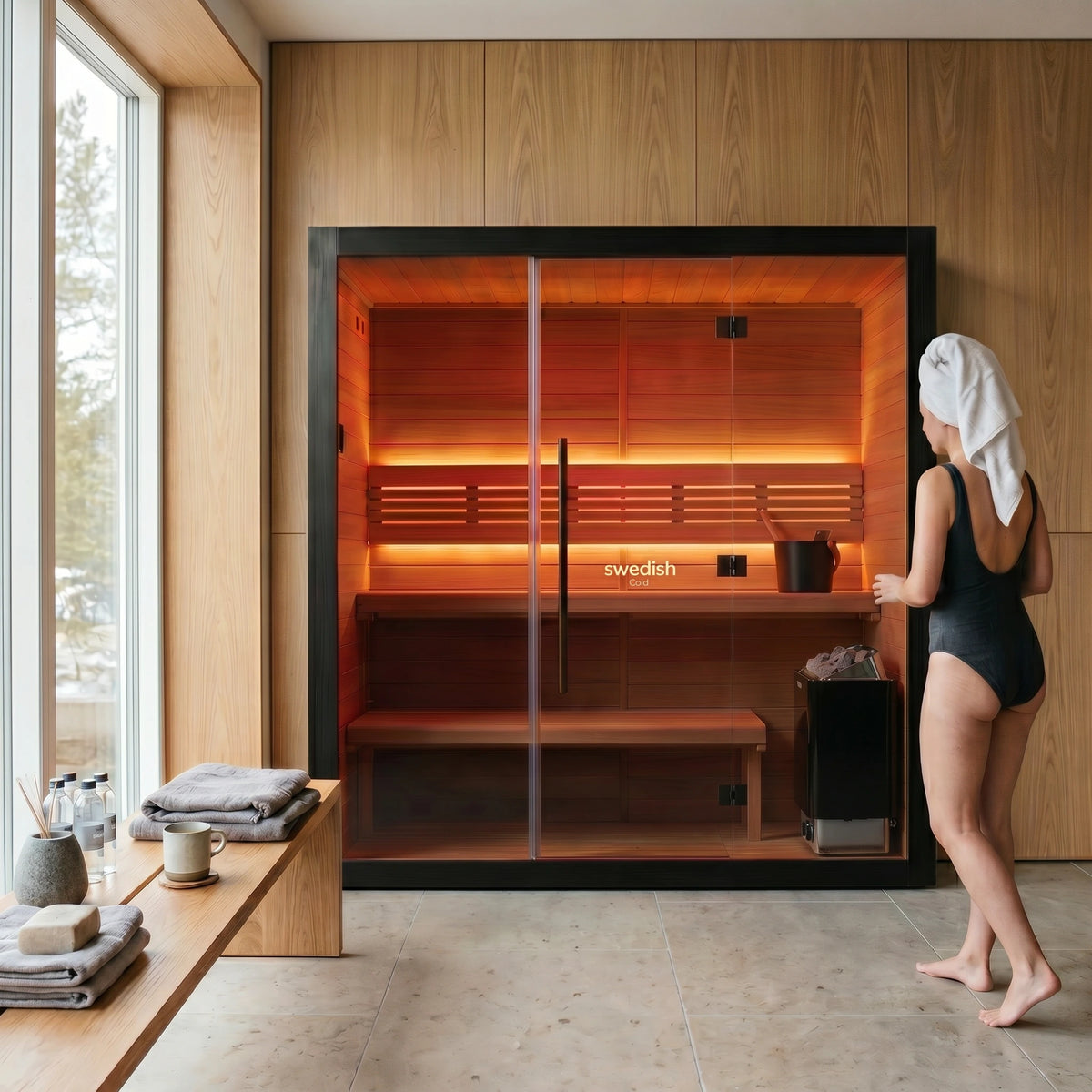
Swedish Cold offers three turnkey traditional saunas: Heritage for indoor use (2–3 people), Private Escape for the patio (2 people), and Grand Escape for the family or a public facility (4 people). All come with an authentic heater, real sauna stones, and the option to pour water on the stones.

What is a traditional sauna—and what makes it unique?

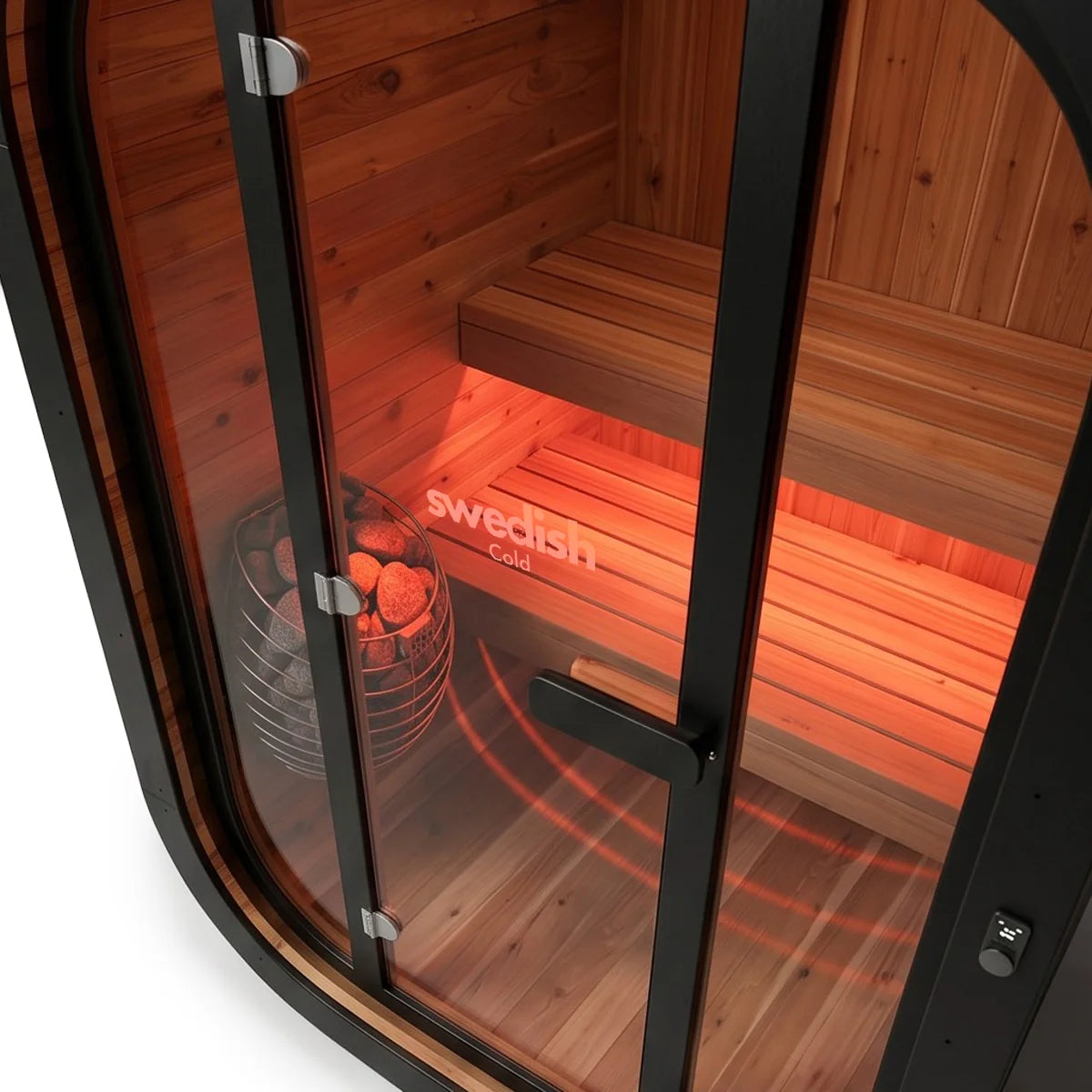
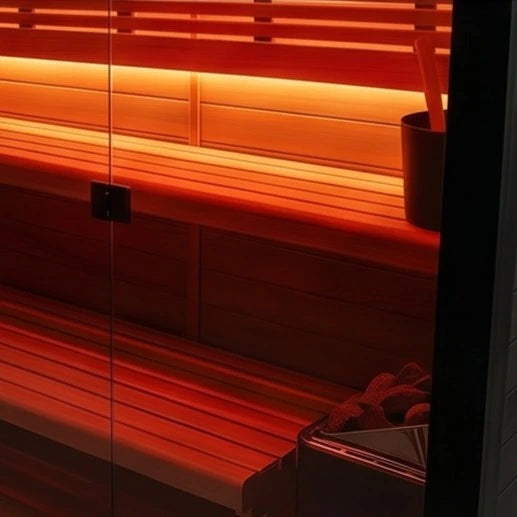
In a traditional sauna, a heater warms the air inside the cabin to a high temperature—usually between 70 and 100 degrees—and the heat is stored in sauna stones placed on top of the heater. The stones are the heart of the sauna. When you pour water over them, steam is created—known as “löyly” in Finnish—which, in a matter of seconds, transforms dry heat into a moist, enveloping warmth that you feel all over your skin.

That is exactly where it differs from an infrared sauna. An IR sauna operates at 40–60 degrees and heats the body directly with radiation—it’s gentler, quieter, and easier to stay in for longer. A traditional sauna, on the other hand, heats the air around you and delivers the intense, sweat-inducing heat that sauna culture is built on. Neither is better than the other. They are different experiences, and if you want löyly, there’s only one option.

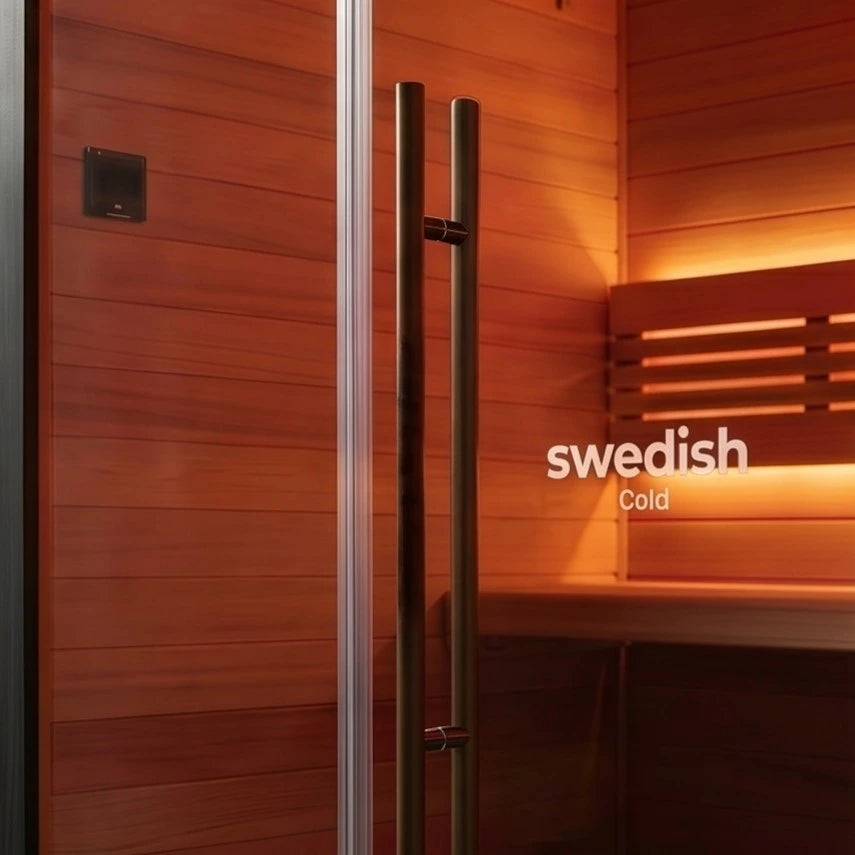
Part of that experience is also the movement in and out. Heat, cold, heat. It is an active process in which the body is forced to adapt, regulate, and recover—not just sit still and relax. Swedish Cold’s traditional saunas are built for exactly that: powerful heaters with sauna stones and a large glass front that makes stepping out into the open a natural part of the ritual rather than an interruption.

What happens in the body during a traditional sauna session?

The body begins to react within a few minutes. Skin temperature rises rapidly in the hot air, and to protect your core temperature, the body triggers a whole series of counter-reactions:

  • The blood vessels dilate. Blood flow is redirected toward the skin to release heat. Circulation increases throughout the body.
  • Your pulse rises. Your heart works harder to pump the increased volume of blood to your skin. The exertion is similar to light to moderate cardio exercise—without you moving.
  • Sweating begins. An active cooling process that cleanses the skin, opens the pores, and washes away the day.
  • The muscles relax. The heat increases the elasticity of the muscles and tendons and releases tension that stretching alone cannot fully address.
  • Stress is released. Endorphins and growth hormone are released, cortisol levels drop, and the nervous system shifts toward recovery.

After 10–15 minutes, the body feels heavy and warm in a way that is hard to replicate anywhere else. And when you then step out into the cool air, the following happens: the blood vessels constrict, blood pressure rises briefly, and the body activates its own heating mechanisms. That alternation between dilation and constriction is what generations have referred to as the sauna cleansing the body—and physiologically, that is pretty much what happens.

Benefits of a Traditional Sauna – What the Research Shows

The traditional sauna is the type of sauna that has been studied the longest and most extensively. The Finnish KIHD study has followed thousands of men for more than 20 years, and the pattern is clear: it is the frequency that determines the effect.

  • Cardiovascular health. People who used the sauna 4–7 times a week had a 50% lower risk of dying from cardiovascular disease compared with those who used it once a week.
  • Brain health. The same group had a 66% lower risk of developing dementia. The effect increased gradually with the number of sauna sessions per week.
  • Recovery after training. Increased blood flow to the muscles reduces stiffness and helps the body feel ready sooner after intense workouts.
  • Sleep and stress. Cortisol levels drop during and after a sauna session. An evening sauna helps many people fall asleep faster.
  • Blood pressure. Regular sauna use is associated with lower resting blood pressure over time, likely due to improved vascular function.

There are two important points to note. These are observational studies, so they show strong associations rather than proven causation, and the effects vary from person to person. A sauna does not replace sleep, diet, and exercise—it complements them. But if you already have the basics in place, a traditional sauna at home is one of the few health-related purchases that becomes more valuable with each passing year.

Getting Started with a Traditional Sauna – Step by Step

There are no complicated rules. But those who get the most out of their sauna follow much the same simple routine:

  1. Preheat the sauna in advance. Set it to 75–85 degrees. Private Escape and Grand Escape are started via Wi-Fi or the touch panel, so the sauna is ready when you are. Allow 30–45 minutes for it to reach full temperature.
  2. Take a shower and dry off. Dry skin starts to sweat sooner than damp skin.
  3. Sit for 10–15 minutes. Start on the lower bench, which is cooler, and move up when you want a greater challenge. Longer isn't better.
  4. Pour water over the stones, one ladle at a time. The löyly immediately makes it feel hotter—this is what sets a traditional sauna apart from everything else.
  5. Step outside and cool down. Step out into the cool air, take a cold shower, or jump straight into an ice bath. The contrast isn't just an optional extra—it's the whole point.
  6. Repeat for 2–3 rounds. Rest for a few minutes between each round and drink some water. Always finish with a cold drink.
  7. Lie still for a while afterward. Your pulse slows, your body feels heavy, and your head becomes strangely clear. That’s the part nobody tells you about beforehand.

Start with two to three sauna sessions a week and build up from there. The goal isn't to have a perfect sauna session—the goal is to make it a habit.

Frequently Asked Questions About Traditional Saunas

A traditional sauna is the classic Nordic sauna: a heater warms the air in the cabin to 70–100 degrees, and sauna stones that store the heat are placed on top of the heater. When you pour water over the stones, steam is created—löyly—which produces the moist, intense heat that defines the sauna session. Unlike an infrared sauna, you are warmed by the air around you rather than by radiation directed at your skin.

A traditional sauna is heated to 70–100 degrees and heats the air inside the cabin. Using sauna stones and water creates löyly and the classic, intense sauna experience. An infrared sauna is heated to 40–60 degrees and heats the body directly with infrared radiation instead of heating the air.

In practice: a traditional sauna offers a more intense experience, induces sweating more quickly, and allows you to pour water on the stones. An infrared sauna is gentler and easier to stay in for longer periods. If you want both in the same cabin, Swedish Cold also offers the Hybrid Sauna, where you can use traditional heat, infrared heat, or both at the same time.

75–85 degrees at bench level is suitable for most people and is the most common range. If you’re a beginner, start around 70 degrees and increase the temperature once you know how your body responds. Above 90 degrees, the session becomes short and intense—it works, but most people prefer a lower temperature and more löyly instead. See how it feels: the perceived heat rises noticeably as soon as you pour water over the stones.

10–15 minutes per round is about right, followed by a few minutes of cooling down. Two to three rounds make up a classic sauna session. Beginners should start with 5–10 minutes on the lower bench. Because a traditional sauna is considerably hotter than an infrared sauna, you sit for a shorter time—the point is the alternation between heat and cold, not how long you can stay in there.

Start with 2–3 times a week and gradually increase the frequency at your own pace. The Finnish KIHD study shows that the benefits increase with frequency: those who used the sauna 4–7 times a week had a 50% lower risk of dying from cardiovascular disease and a 66% lower risk of dementia compared to those who used it once a week. A daily sauna is not a problem for healthy adults. With a sauna at home, the barrier to use is low enough that it actually happens.

It is the stones that create the experience, not the heat source. An electric sauna with sauna stones provides exactly the same löyly as a wood-fired one: pour water over hot stones, and you get the same steam and the same sensation. The advantages of electric saunas are practical and significant—the sauna heats up in 30–45 minutes, the temperature remains constant throughout the session, you avoid having to chop, dry, and store wood, there’s no chimney to sweep, and there’s no fire risk from sparks. Swedish Cold uses heaters from Harvia, one of the world’s leading sauna brands.

Heritage is our traditional indoor sauna for 2–3 people, measuring 1,600 × 1,200 × 2,000 mm, with a black exterior, a panoramic front made of smoked safety glass, a two-level bench, and Bluetooth audio. It is freestanding and requires no construction work.

Private Escape is an outdoor sauna for two people, featuring a 4.5 kW heater, carbonized white pine, and a waterproof roof. Grand Escape is the largest model, measuring 2.10 × 1.80 meters, with room for four people and an 8 kW heater that heats up quickly even on cold winter days. Both outdoor models are controlled via Wi-Fi and a touch panel.

This depends entirely on where you live. Under Swedish planning regulations, Swedish Cold’s outdoor saunas are exempt from a building permit provided they are placed at least 4.5 meters from the property boundary and are under 15 m². Both the Private Escape and the Grand Escape are well under that size limit—the Grand Escape measures 2.10 × 1.80 meters, just under 4 m². Under those same Swedish regulations, placing the sauna closer to the property line requires your neighbor’s consent. Regulations differ in other countries, including the United Kingdom, so always check the requirements with your local planning authority before placing an order.

This is determined by the heater’s output. The Private Escape has a 4.5 kW heater and the Grand Escape has an 8 kW heater, which is the power they draw at full output during the warm-up phase. Once the target temperature is reached, the heater cycles on and off to maintain the temperature, so power consumption during the session itself is considerably lower than the rated output. We provide the power requirements and connection specifications prior to delivery to ensure that the electrical supply is in place in time.

Yes, and we highly recommend it. Alternating between a hot sauna and cold water—contrast therapy—is the most well-established form of sauna bathing and the one with the most noticeable effect on circulation, recovery, and stress. Swedish Cold offers the entire range: traditional saunas, infrared saunas, and ice baths, all of the same premium quality. Place a Swedish Cold ice bath next to the sauna, and you’ll have a complete recovery room right at home.

Carbonized white pine requires no maintenance—no oiling, no surface treatment, and no impregnation. Wipe down the benches after your session and let the sauna air out properly so that it dries out between uses. The sauna stones should be placed loosely so that heat can circulate, and they should be turned or replaced when they start to crumble, usually after a few years of regular use. The Harvia heater is industrial-grade and requires minimal maintenance.

Yes. All Swedish Cold saunas are delivered ready to use—no loose parts, no assembly required, and no tools needed. Delivery time for the outdoor models is 12–14 weeks, with express delivery available for an additional fee. A 1-year warranty is included as standard, with the option to extend it up to 5 years, and we’re still here after delivery to provide service, spare parts, and support.

Ta kontakt med oss, eller få mer information