
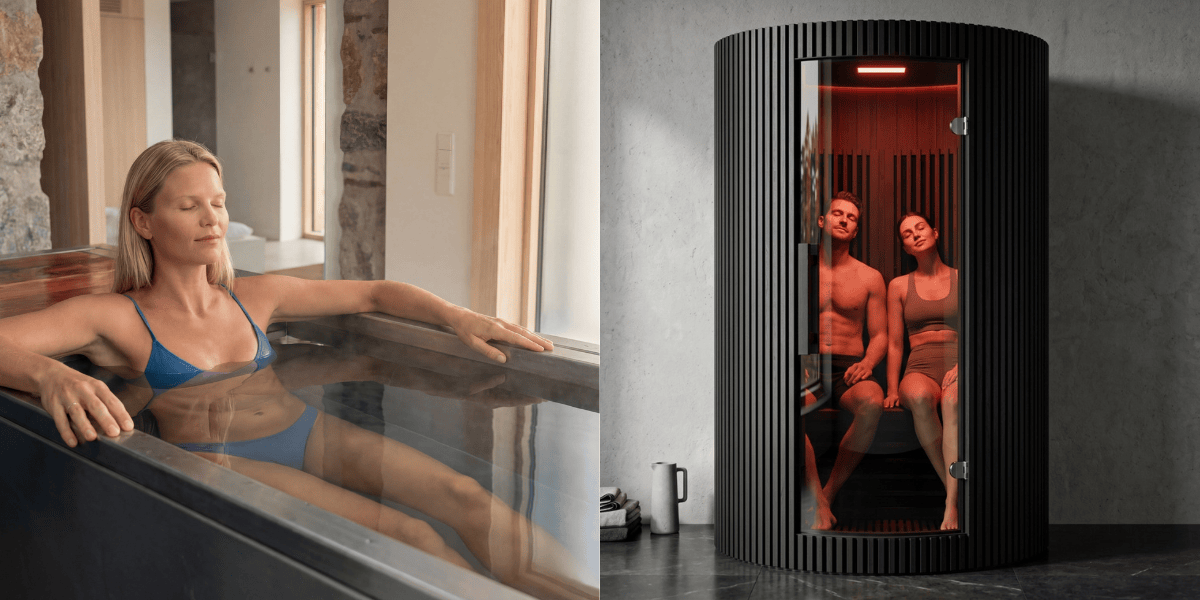
Should you start with the sauna or the ice bath? We’ll walk you through the order, the benefits, and a simple protocol for contrast therapy at home.
It’s one of the most common questions we get from both individual customers and facilities that have just installed their first system: should you start with hot or cold? The answer isn’t as obvious as many people think—and the right order actually makes a difference in both the experience and the results.
Here, we’ll go over what happens in the body, which order works best for different goals, and a simple routine you can start following tonight.
Short answer: Start with the sauna
For most people , starting with a sauna followed by an ice bath is the natural way to begin. The heat dilates the blood vessels, raises the heart rate, and relaxes the muscles. When you then step into the cold water, your body constricts the blood vessels again, and it is precisely this alternation between hot and cold that is the whole point of contrast therapy.
Finishing your workout in the cold also leaves you feeling sharp and alert afterward—a sensation many describe as almost euphoric. You simply don’t want to end your workout by getting warm and drowsy if you plan to stay alert for the rest of the day.
But...and this is important, there are times when you want to turn it around.
When you should wrap things up indoors instead
Do you work out late at night and want to be able to fall asleep afterward? If so, it might be a good idea to finish with a sauna instead. Cold temperatures stimulate the body, while a relaxing moment in the heat helps you wind down before bed.
The same goes if you’re new to cold water swimming. Stepping out of the ice bath and straight into a warm sauna makes the whole experience more manageable and helps your body recover faster between sessions. It lowers the barrier to entry—and actually gives you the confidence to do it again.
What exactly happens in the body?
Contrast therapy involves deliberately exposing the body to temperature changes. The heat and cold cause the blood vessels to constrict and dilate in a rhythm often likened to a pump.
In the sauna, your body temperature rises, your heart rate increases, and your muscles relax. In the ice bath, the opposite happens: your blood vessels constrict, your breathing deepens, and your nervous system gets a real wake-up call. Many people experience increased mental clarity, better sleep, and a sense of hitting the "reset button" after a session.
It’s worth being honest about one thing: research on cold baths and saunas is growing rapidly, but not everything is set in stone. What we do know for sure, however, is that contrast therapy, when done correctly, feels good, is easy to make a habit of, and that the habit itself is what yields results over time.
A simple protocol to start with
If you're new to this, we recommend keeping it simple the first few times:
- Sauna, 10–15 minutes. Sit there until you feel thoroughly warmed up and sweaty.
- Ice bath, 1–3 minutes. Step in slowly, focusing on long, controlled exhalations.
- Rest for 2–3 minutes. Let your body recover before the next lap.
- Repeat 2–3 times. Finish in the cold if you want to feel energized, or in the warmth if you want to wind down.
Never push yourself beyond your comfort zone in the ice bath. It’s not about competing to see how long you can last; it’s about consistency. Three short, comfortable sessions a week are better than a single grueling session that you’ll be reluctant to repeat.
Common mistakes to avoid
Jumping right into the cold without warming up. It’s possible, but for beginners it’s unnecessarily difficult and increases the risk of giving up.
Staying in the ice bath too long. More isn’t better. The effect comes from the shock and the contrast, not from the length of time.
Forgetting to breathe. Your first instinct is to gasp for air. Long, slow exhalations are the difference between panic and control.
Don’t let it become a routine. The single most important factor for success is that you actually keep at it. Try incorporating the sauna and ice bath into your daily routine.
Sauna and ice bath at home — or at the facility
For private individuals, the biggest hurdle is often practical: where do you put it, and how do you maintain it? Modern outdoor saunas and ice baths are built for the Nordic climate and require less maintenance than most people think—especially ice baths with built-in cooling and filtration systems, where the water stays clean without you having to change it all the time.
For hotels, gyms, and spa facilities, the combination of a sauna and an ice bath also offers clear added value for guests. Recovery has gone from being a niche offering to an expectation, and a well-designed contrast zone is often what encourages visitors to stay longer—and come back.
Frequently asked questions
How often should you use the sauna and take an ice bath? Two to four times a week is a good starting point for most people. Listen to your body and build up gradually.
How cold should the ice bath be? Many people find 8–12 degrees Celsius comfortable. If you’re a beginner, you can start with a warmer temperature and gradually lower it.
Can you take an ice bath without a sauna? Absolutely. The sauna enhances the experience and makes the cold more bearable, but ice baths work perfectly well on their own.
Is contrast therapy dangerous? For healthy people, it is generally safe, but if you have cardiovascular disease, are pregnant, or have other health issues, you should consult a doctor first.
Executive summary
Start with the sauna, and finish in the cold if you want to feel energized—or in the warmth if you want to wind down before bed. Keep your sessions short, breathe calmly, and do it regularly. It’s the rhythm and the habit that produce results, not heroic feats.
Would you like to build your own contrast zone at home or at your facility? Explore our saunas and ice baths here, or contact us and we’ll help you find the right solution.
Share:
Cold baths are my go-to method for recovery in the evenings and early mornings
According to research, this is how often you should use a sauna to see results