
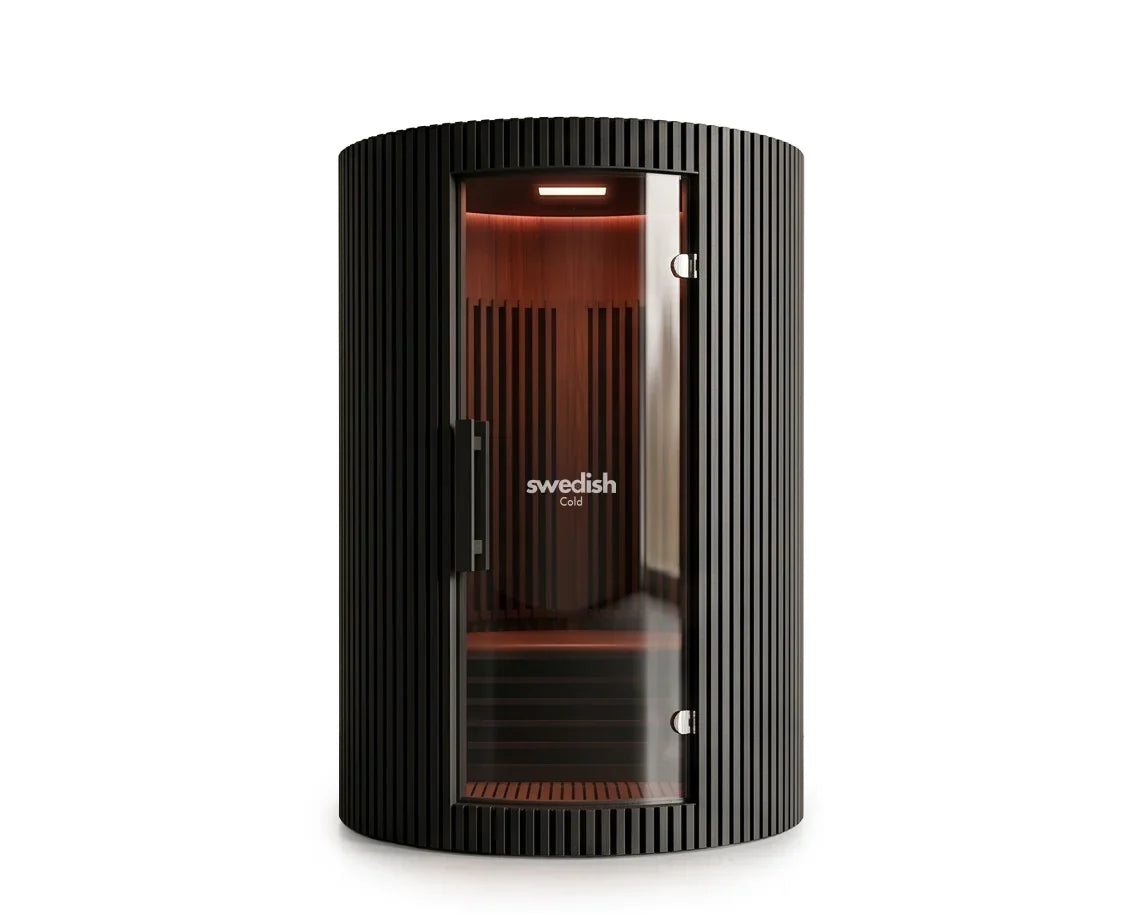
Choosing an infrared sauna for your home involves more than just finding a model that fits in a corner. You need to be able to bring the parts inside, assemble the cabin, open the door, and use the sauna comfortably. Here’s a practical guide to help you compare infrared saunas and plan the space before you order.
Infrared or traditional sauna?
An infrared sauna uses infrared heating panels. A traditional sauna relies on a sauna heater that heats the room and the stones. Choose based on the experience you’re looking for and how the space can be set up. An infrared cabin is not automatically intended for outdoor use, and a hybrid model must be evaluated based on its own specifications.
For a garden project, check out our guide to traditional outdoor saunas. Here, we focus on infrared saunas for indoor use.
Measure all the way in
Note the room’s width, depth, and ceiling height. Then check the doorways, stairways, and passageways through which the parts must pass. Ask for the shipping dimensions and installation space; the finished product’s dimensions alone are not enough to determine whether installation is feasible.
Choose the number of seats based on how many people will actually be sitting at the same time. Ask for the bench dimensions and check the door opening. The placement should also allow for the clearances and access required in the manual.
Power connection: Check the exact model
Check the voltage, maximum power, and connection requirements. Even if a model plugs in, the outlet and electrical circuit must be suitable for the load. If in doubt, have an electrician assess the installation. Do not use general information about infrared saunas as installation instructions for a specific model.
According to current product information, the Sanctuary Duo is an indoor model for two people, rated for 220–240 V AC / 50 Hz and a maximum power of 2,300 W. Always verify the requirements of the ordered configuration before installation.
How much does it cost to operate an infrared sauna?
The calculation is: energy in kWh × your electricity rate per kWh. Power and energy are different things. If a sauna draws 2.3 kW continuously for one hour, the energy consumption is 2.3 kWh. This is a sample calculation based on full power, not a measured typical consumption.
Include both preheating and usage in the comparison. Actual consumption is affected by the model, settings, room temperature, and operating time. Ask for measurement data and measurement conditions if a supplier quotes a cost per sauna session.
Ventilation, Cleaning, and Equipment
Choose a location that meets the manual’s requirements for ventilation, temperature, and humidity. Just because a sauna is located indoors does not mean it can be placed in just any wet area. Protect surfaces with a towel where the manual recommends it, clean according to the instructions, and let the cabin dry after use.
Compare what’s actually included: heating panels, controls, lighting, and possibly a sound system. A separate red-light panel is a different feature than the sauna’s infrared heating panels. Check the price of the optional features and any additional electrical requirements.
Prepare your inquiry
Send the room's dimensions, photos, number of users, and information about the electrical connection to Swedish Cold. Read about the Sanctuary Duo and compare it with the Sanctuary Solo. Request a quote that lists delivery, installation, and any electrical work separately.
Follow the model's instructions for use and safety. This guide is intended to help you plan your purchase and does not replace the installation manual.
Share:
Traditional Outdoor Sauna: Plan Your Sauna in the Garden