
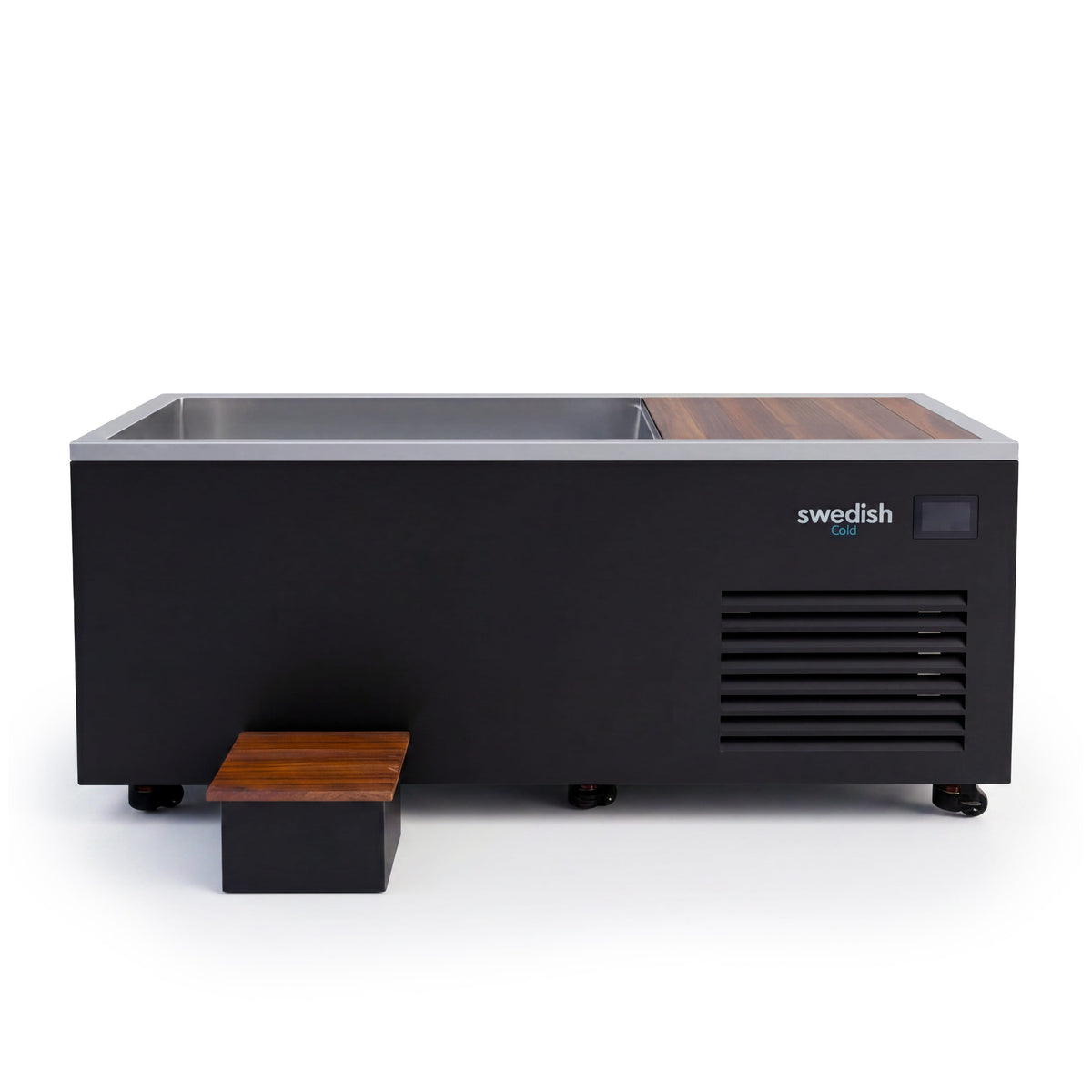
An ice bath should be easy to use even after the first week. That’s when a good maintenance routine makes all the difference: you’ll know when to check the filter, how to change the water, and what changes you need to address.
Here is a practical guide to cleaning your ice bath and maintaining proper water quality. It serves as a planning guide for cold baths at home. Specific chemicals, measurement values, and maintenance intervals should always be obtained from the instructions for your specific bath and its filtration system.
Quick Guide: Three Components That Need to Work Together
- Filtration: Check and maintain the filter according to the model's instructions.
- Water Management: Follow the system's procedures for monitoring and treating the water.
- Cleaning: Clean the tank, waterline, and lid, and schedule water changes.
A particle filter and a disinfection system serve different purposes. The filter traps particles, while disinfection is intended to reduce the number of microorganisms. The equipment must be used in conjunction with cleaning and monitoring. Cooling does not replace these steps.
How often should you change the water in an ice bath?
There is no single water-change interval that applies to all ice baths. A tub without continuous filtration, a filtered home bath, and a cold bath at a busy gym all have different conditions. Base your decision on the manufacturer’s maintenance schedule and how the bath is actually used.
When buying a bathtub, ask for a clear answer to four questions:
- What is the recommended water change interval for this model based on our usage?
- What checks should be performed between water changes?
- What changes will result from taking the pool out of service until the water and the system have been inspected?
- What happens if the pool is left unused or the filtration system stops working?
Describe the use in concrete terms. “One person a few times a week” is more specific than “personal use.” Also note whether the tub is located outdoors, whether multiple people share it, and whether it is used immediately after exercise.
Do this before and after every bath
Before: Check the operation of the bath
Check that the spa is operating normally, that the water level is as specified in the manual, and that there are no new error messages. Look for visible dirt or any changes since the last use. If anything seems unusual, determine the cause before using the spa.
After: Leave the bathroom ready for next time
Remove visible leaves and other debris using a tool suitable for the surface. Keep the area around the tub clean and replace the cover according to the manufacturer's instructions.
Ensure that circulation and filtration follow the operating schedule specified for the model. Do not change the operating times solely to save electricity without first checking how this affects water quality.
Cleaning an Ice Bath When Changing the Water: Step by Step
Have the correct filter, approved cleaning products, a soft cloth or other recommended cleaning tool, and the equipment needed for emptying the unit ready. Keep the manual handy, especially the first time.
- Follow the shutdown procedure. Turn off and disconnect the equipment as specified in the manual before performing maintenance. Protect electrical components from water.
- Drain through the designated connection. Plan where the water will be directed. Follow the instructions for any water treatment products and the local conditions for drainage.
- Clean the accessible surfaces. Work systematically on the tub, waterline, edges, and lid. Use products and tools approved by the manufacturer for the material.
- Maintain the filter properly. Replace disposable filters. Clean only filters that are specifically designed to be reused, following the instructions provided.
- Follow any procedures for piping and disinfection. Wiping down the tank is not the same as cleaning the entire system. Do not open any technical components that require service personnel.
- Fill and start the pump according to the manual. Make sure the filter and connections are properly installed, fill to the specified level, and follow the startup sequence. Do not start the pump when the tank is empty.
- Check before your next swim. Ensure normal circulation, that there are no leaks, and that the required water tests have passed. Record the dates of cleaning, water changes, and filter replacements.
Never mix different cleaning or water treatment products. Do not use a product intended for pools or hot tubs in your ice bath without first verifying that it is suitable for your specific system and materials.
Filters, UV, and Ozone: What Do They Mean for Maintenance?
When comparing ice baths, it’s easy to get caught up in how many purification steps are listed. Also ask what each step requires of you as the owner: which parts need to be replaced, what can you check yourself, and what needs servicing?
If the hot tub has a UV or ozone system, ask for the service intervals and instructions on how to check that the system is working properly. Having a filtration system installed does not mean the hot tub can be left unattended. Nor does a new filter mean you can skip cleaning the tub.
For Generation 5, for example, the maintenance plan should be based on the configuration provided and whether the tub is used at home or in a commercial setting. Save the model information and instructions together; this will make it easier to order the correct replacement parts and receive the right support.
A checklist to save
- Before each swim: check the water level, look for any visible changes, and verify the operating status.
- After using the bath: Remove any visible debris, keep the surfaces around the bath clean, and replace the lid.
- According to the maintenance plan: check the water levels, inspect the filter, and follow up on any service indicators.
- When changing the water: clean according to the manual, maintain the filter, follow the restart procedure, and note the date.
- During downtime: Follow the model’s instructions for shutdown and restart. For outdoor pools, frost protection must also be handled according to the manual.
A simple log goes a long way at home: date, approximate usage, inspection results, action taken, and the next scheduled service. It’s better to write “filter replaced on October 5” than “filter checked.” That way, you’ll know exactly what was done.
Cloudy water, scale buildup, or low flow?
Don't try to resolve all deviations by adding more water treatment chemicals. Start by checking what has changed.
- Cloudy water or a new odor: Stop swimming. Check the operation, filters, and the water parameters for the system. Follow the instructions for corrective action and restarting the system.
- Slippery surfaces or coatings: Do not use the tub until the cause has been determined and proper cleaning has been performed. Changing the water alone does not clean the surfaces.
- Low flow or alarm: Follow the troubleshooting instructions in the manual. A clogged filter may be the cause, but you should also check the water level, air in the system, or technical malfunctions. Do not bypass safety devices or sensors.
- If the problem recurs after cleaning, contact support with the model number, photos, the error message, and your maintenance log. Request an assessment of the entire system.
Gyms, hotels, and spas need their own operating plans
A swimming facility shared by many people requires procedures tailored to its operations. The Public Health Agency of Sweden’s guidelines for public swimming pools cover, among other things, self-monitoring, water treatment, cleaning, and water quality. Use these guidelines in conjunction with discussions with the municipality’s environmental and health protection department and the supplier when planning the facility. A checklist for home use is not a substitute for this. Read the Public Health Agency of Sweden’s guidelines on swimming pools.
For planning the facility itself, we also offer our guide to cold-water pools for gyms, hotels, and spas.
Choose an ice bath that's easy to maintain
Consider your daily routine even before making the purchase. Can you access the filter without moving the tub? Can you connect the drain hose where the tub will be installed? Is there enough space to open the service hatch? Will you receive a clear maintenance plan and have access to replacement parts?
These questions are just as important as temperature and design. Read our buying guide to cold baths at home and our breakdown of electricity, water, and maintenance costs as you compare your options.
Would you like help choosing the right model and setting up a maintenance plan? Contact Swedish Cold and let us know where the hot tub will be located and how many people will be using it. If you already have a hot tub, please specify the model and configuration so we can direct you to the correct instructions.
Share:
Infrared sauna at home: plan space, power and placement